

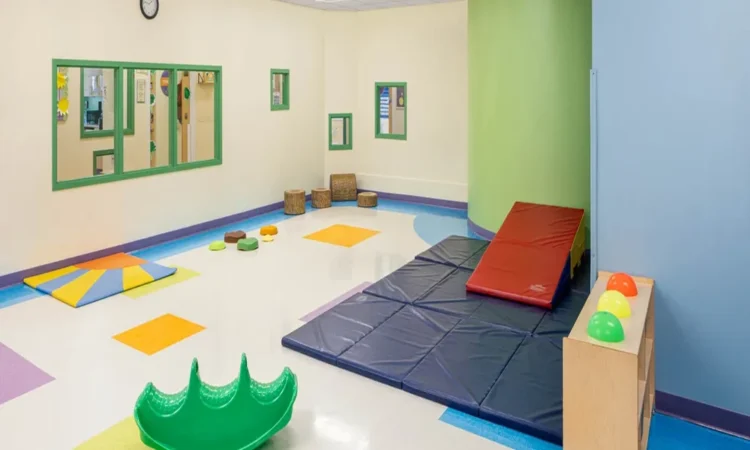
Learning is not always in the context of a structured lesson, lecture, or worksheet for young children. Questions, experiments, exploration, and play with what is in the world around them are children’s natural ways of learning. Because of this, play-based learning is taking a prominent place in ECE. Thoughtfully designed play experiences can create opportunities for these yet fundamental and enriching discoveries from simple daily activities in a melrose daycare center. For example, at Little Elephant Learning Center, the philosophy is geared towards experimentation, exploration, and questioning-the natural ways in which young children learn.
Acquiring the skills for thinking and problem-solving
Play allows children to explore and think, try things they have planned, and correct their ideas. The use of blocks, puzzles, sorting games, playing a pretend shop, or sand and water play can involve children in ideas developing in sections of the curriculum such as mathematics, science, language, and reasoning. Play fosters tummy time, cognitive development, problem solving, language, and infant academic skills, according to the National Association for the Education of Young Children (NAEYC). Rather than merely copying information, children get opportunities to develop an awareness of concepts through real-life experiences.
Developing Social and Emotional Competence
Social and emotional skills are also crucial in the context of play. By playing together in group games and engaging in imaginative play, children are able to communicate, cooperate, take turns, negotiate, and resolve disagreements. These experiences can start to develop confidence and self-regulation of emotions gradually. Play breeds peer relationships, emotional attributes, and self-regulation, as well as social attributes, according to NAEYC. A nurturing child care setting can then assist children in becoming more at ease with the expression of their ideas and elucidate the importance of considering other viewpoints.
Supporting independence and creativity
Perhaps one of the strongest attributes of play-based learning is that children have the opportunity to make choices. They can choose materials they wish to use, the way they could investigate a problem, and how they can create an imaginative narrative. This feeling of being “in charge” fosters creativity, independence, and persistence. There is a philosophy of children at Little Elephant Learning Center to appreciate and value each child’s ability to be a competent participant in the community and encourage their interests and growth. The use of guided play can greatly reinforce learning since the teacher can pose questions, provide materials, and be ready with challenges without taking control of the child and his/her exploration.
Preparing pupils for lifelong learning
Play-based learning is not just keeping children busy! It can be fostered by teachers in intentional ways and facilitate co-development of curiosity, communication, creativity, problem-solving, and collaboration. According to the research summarized by NAEYC, play is a key component in young children’s instruction, and play itself is a valuable learning tool, and play can be either child-directed or guided. Early childhood programs can help to foster positive attitudes towards discovery and learning by providing children with meaningful experiences through which they can learn. Many parents know little about play and may find it significant to strengthen their awareness of the importance of play when comparing care settings to find one that offers children confidence, curiosity, and enjoyment in their development.


